
Introduction
Have you ever looked at a skateboard deck and wondered how that single piece of wood—curved, springy, and strong enough to withstand hundreds of pounds of impact—actually comes to life? The answer is more complex than you might think.
A skateboard deck isn’t just a slab of wood. It’s a carefully engineered product made from multiple layers of veneer, precision-glued, shaped under immense pressure, and finished with painstaking attention to detail. Modern skateboard manufacturing blends traditional woodworking craftsmanship with advanced industrial processes to create decks that are lightweight, durable, and responsive.
In this guide, we’ll walk through the complete skateboard deck manufacturing process—from raw maple veneer to the finished deck that lands in your hands. Whether you’re a brand owner looking to request a quote or simply curious about how your favorite deck is made, this article will give you a behind-the-scenes look at the art and science of deck production.
Raw Materials: The Foundation of Every Deck
Every great skateboard deck starts with the right materials. The vast majority of professional-grade skateboard decks are made from Canadian hard rock maple—a dense, resilient wood that offers the perfect balance of strength, flexibility, and pop.
Why Maple?
Canadian maple is the industry standard for a reason. Its tight grain structure provides exceptional durability while maintaining the springy “pop” that skaters rely on for ollies and tricks. Some manufacturers also experiment with bamboo, fiberglass, or carbon fiber for specialized decks, but maple remains the gold standard.
Veneer Preparation
The manufacturing process begins with maple logs that are rotary-peeled into thin sheets called veneers. Each veneer is roughly 1/16-inch thick. A standard skateboard deck is constructed from seven plies (layers) of these veneers, though some decks use five or nine plies depending on the desired flex and durability.
The veneers are sorted, dried to precise moisture content, and cut to size before moving to the next stage. Quality control at this stage is critical—any imperfection in the veneer can compromise the final deck.
Gluing and Layering: Building the Blank
Once the veneers are ready, the next step is gluing and layering—the process of stacking the seven plies into a single “blank” that will eventually become a skateboard deck.
Adhesive Application
A high-quality adhesive is applied between each layer of veneer. Manufacturers typically use water-based polyvinyl glues for cold pressing or epoxy resins for hot pressing. The glue must be applied evenly to ensure a strong, consistent bond across the entire deck.
Layer Orientation
The orientation of each veneer layer matters. Manufacturers alternate the grain direction of adjacent plies—a technique known as crossbanding—to maximize strength and prevent the deck from warping. This cross-laminated construction is what gives skateboard decks their incredible strength-to-weight ratio.
Stacking
The seven veneer layers are stacked in the desired order. For custom OEM orders, this is where brands can specify unique color combinations, dyed face sheets, or special materials. If you’re working with a skateboard deck manufacturer, this is one of the earliest points where your specifications come into play.
Pressing: Shaping the Deck
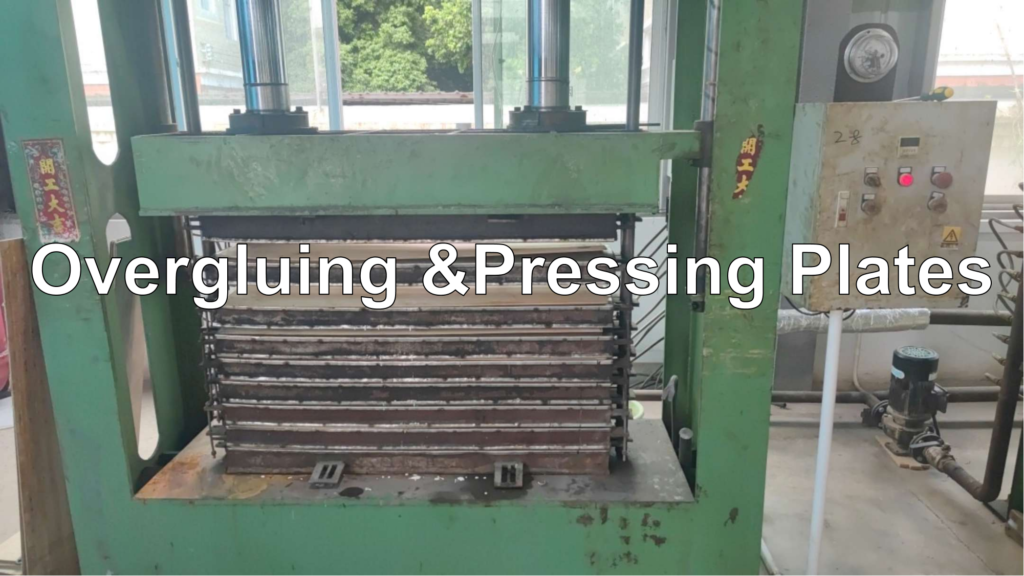
Pressing is arguably the most critical step in skateboard deck manufacturing. This is where the flat stack of veneers is transformed into a curved, concave skateboard deck.
The Mold
The stacked veneers are placed into a mold—a precision-engineered tool that determines the deck’s concave, kicktail angle, and overall shape. The mold has a contoured surface that matches the desired finished shape. Different molds produce different concaves—from mellow to steep—and manufacturers often maintain an extensive library of mold options.
Cold Pressing vs. Hot Pressing
There are two primary pressing methods:
Cold Pressing: The veneers are coated with water-based adhesive and pressed in the mold at room temperature for 1.5 to 2 hours. After pressing, the blanks are allowed to cure for 4 to 7 days in large stacks. Cold pressing doesn’t subject the wood to high temperatures that can weaken wood fibers, making it the preferred method for many premium manufacturers. Pressure typically reaches around 60 tons.
Hot Pressing: Manufacturers use epoxy resins and place the veneers in a heated mold. The heat cures the adhesive in just about 5 minutes. Hot pressing is faster and can produce a higher-performance deck by removing excess resin, but heat presses are around 40% more expensive and can pull moisture from the wood, potentially damaging the upper layers.
Pressing Pressure
Regardless of the method, the press applies approximately 300 psi of pressure to mold the veneers into the desired concave and convex shape. The combination of heat (in hot pressing) or time (in cold pressing) and pressure cures the adhesive so the veneers are tightly bonded together to maintain the molded shape.
Shaping, Drilling, and Finishing
After pressing and curing, the rectangular “blank” is ready to be transformed into a finished skateboard deck.
Cutting the Shape
The deck blank is cut into its final shape using a template or CNC router. This step removes the excess material and defines the deck’s silhouette—including the nose, tail, and width.
Drilling Truck Holes
Precision drilling creates the mounting holes for trucks. The hole pattern must be exact—any misalignment will prevent trucks from mounting properly. Many manufacturers use reference holes in the mold or drill press with alignment pegs to ensure consistency.
Routing and Sanding
The edges are routed to smooth the cut lines, followed by multiple sanding stages. Bladder or balloon sanding smooths the edges, while surface sanding prepares the top and bottom faces for graphics and grip tape.
Surface Finishing
A coat of lacquer is applied to seal the wood and protect it from moisture. Premium manufacturers apply three coats—the first to seal, and the second and third to build a glossy, durable finish.
Graphic Application
Graphics are applied using screen printing, heat transfer, or digital printing, depending on the order specifications. For custom OEM skateboard orders, this is where your brand’s artwork comes to life on the deck.
Quality Control: Ensuring Consistency and Safety
Quality control isn’t an afterthought—it’s integrated into every stage of production.
Visual Inspection
Each deck is inspected for visual defects: edge smoothness, absence of cracks or chips, proper grip tape adhesion, and consistent finish. Inspectors check for delamination (separation of layers), warping, and adhesive failures.
Structural Testing
Decks undergo rigorous testing to ensure they can withstand real-world abuse:
- Fracture pressure testing to measure breaking strength
- Impact testing by striking decks against hard surfaces
- Stress testing around truck mounting holes, where cracks are most likely to develop
Dimensional Accuracy
Manufacturers verify that each deck meets the specified dimensions, concave depth, and hole placement. Any deck that fails inspection is rejected.
For brands working with a skateboard deck manufacturer, understanding the quality control process is essential. Reputable manufacturers have inspection protocols at every production stage, not just at the end. If you want to learn more about the end-to-end workflow, check out our detailed skateboard manufacturing process guide.
FAQ
How many layers of wood are in a skateboard deck?
Most skateboard decks are made from seven plies of maple veneer. Some decks use five plies for lighter, more flexible boards, or nine plies for extra durability.
What type of wood is used for skateboard decks?
The industry standard is Canadian hard rock maple. Some manufacturers also use bamboo, fiberglass, or carbon fiber for specialized decks.
What’s the difference between cold pressing and hot pressing?
Cold pressing uses water-based adhesive and takes 1.5–2 hours at room temperature, followed by several days of curing. Hot pressing uses epoxy resin and heat, curing in about 5 minutes. Cold pressing is gentler on the wood, while hot pressing is faster and can produce higher-performance decks.
How long does it take to manufacture a skateboard deck?
The full process—from veneer preparation to finished deck—typically takes 2 to 4 weeks, depending on order size, customization complexity, and curing time. Cold-pressed decks require additional curing time (4–7 days).
Can I customize the shape and concave of my decks?
Yes. Most skateboard deck manufacturers offer extensive customization options, including shape, concave depth, size, materials, and graphics. Custom molds can be developed for unique concave profiles.
What quality control checks are performed on skateboard decks?
Quality control includes visual inspection for defects, dimensional accuracy checks, fracture and impact testing, and stress testing around truck mounting holes. Reputable manufacturers perform inspections at every production stage.
Conclusion
The journey from raw maple veneer to a finished skateboard deck is a remarkable blend of tradition and technology. Seven layers of carefully selected maple are glued, stacked, pressed under immense pressure, shaped with precision, and finished with meticulous care. Every step—from material selection to quality control—affects the final product’s performance, durability, and feel.
Whether you choose cold pressing for its wood-friendly approach or hot pressing for speed and performance, the manufacturing process demands expertise and attention to detail. For brands, understanding this process is the first step toward creating decks that skaters will love.
REQUEST A QUOTE
Ready to bring your skateboard deck vision to life? Whether you need custom OEM production with unique shapes and concaves or private label manufacturing with your branding on existing designs, we’re here to help.
Our team works with you through every stage—from material selection and mold development to sampling, bulk production, and global delivery. We offer flexible solutions for startups and established brands alike.
Request a Quote today and let’s start building your perfect skateboard deck.