
If you’re building a skateboard brand, managing a retail shop, or sourcing products for distribution, one of the first decisions you’ll face is a fundamental one: should you source complete skateboards or just skateboard decks?
It sounds like a simple question, but the answer has major implications for your pricing strategy, target audience, inventory management, and profit margins. Complete skateboards and standalone decks serve different customers, require different levels of assembly, and come with different sourcing considerations.
Some brands focus exclusively on one; others carry both. The right choice depends entirely on your business model, your market, and your goals.
In this guide, we’ll break down the differences between complete skateboards and skateboard decks, explore the pros and cons of sourcing each, and help you decide which is the better fit for your business. Whether you’re launching a new brand or expanding an existing product line, this article will give you the clarity you need—and when you’re ready to move forward, you can request a quote to get started.
What Is a Complete Skateboard?
A complete skateboard is exactly what it sounds like: a fully assembled, ready-to-ride skateboard. It includes every component needed to hit the pavement straight out of the box.
Components of a Complete Skateboard
A standard complete skateboard consists of:
- Deck – The wooden board itself, typically 7-ply maple
- Trucks – The metal T-shaped axles that attach to the deck and hold the wheels
- Wheels – Usually four wheels, sized and hardened based on intended use
- Bearings – The mechanisms inside the wheels that allow them to spin
- Grip tape – The abrasive surface applied to the top of the deck for traction
- Hardware – Bolts and nuts that hold everything together
- Risers (optional) – Pads placed between the deck and trucks to adjust height or reduce vibration
Who Buys Complete Skateboards?
Complete skateboards are primarily purchased by:
- Beginners who don’t know how to assemble a skateboard or which components work together
- Parents buying for their kids who want a hassle-free option
- Casual riders who just want something to cruise around on
- Retailers who want to offer ready-to-ride products to walk-in customers
- Gift buyers who need a complete package
Advantages of Sourcing Complete Skateboards
- Higher perceived value – A complete skateboard is a finished product, which justifies a higher retail price.
- Broader market appeal – You can sell to beginners and casual riders, not just serious skaters.
- Convenience for customers – No assembly required; the board is ready to ride.
- Simpler inventory – One SKU per complete board instead of managing separate components.
- Higher average order value – Completes typically sell for more than decks alone.
Disadvantages of Sourcing Complete Skateboards
- Higher unit cost – You’re paying for all components, not just the deck.
- Less customization flexibility – Customers can’t mix and match components as easily.
- Component quality variance – Some manufacturers cut corners on trucks, wheels, or bearings to keep costs down.
- More complex quality control – Every component needs to meet standards, not just the deck.
If you’re sourcing completes, it’s essential to work with a reputable complete skateboard manufacturer who uses quality components and assembles them correctly.
What Is a Skateboard Deck?
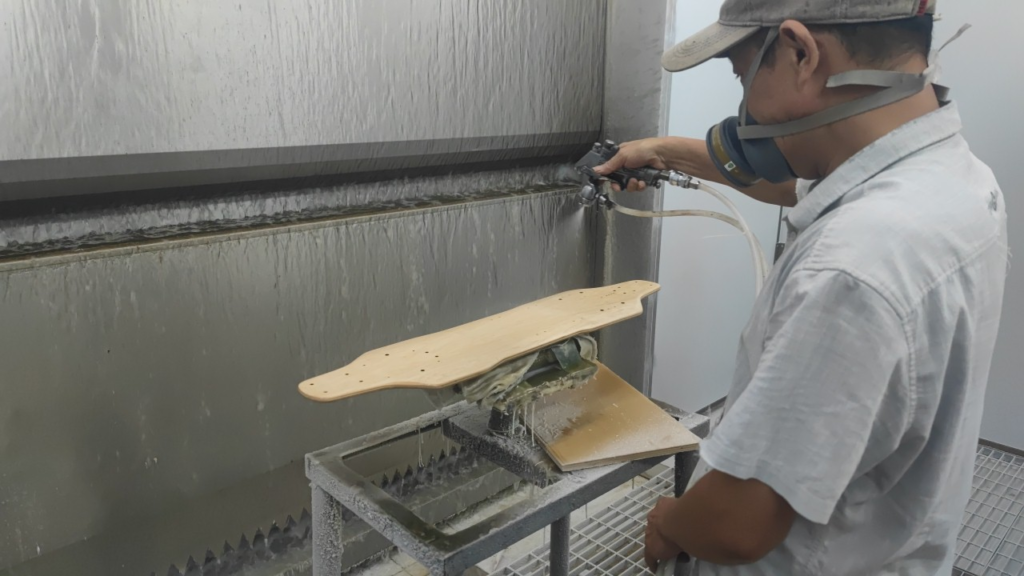
A skateboard deck is just the wooden board—no trucks, wheels, bearings, or grip tape included. It’s the core of the skateboard, but it’s not ready to ride on its own.
What’s Included (and Not Included) with a Deck
A standalone deck typically includes:
- The pressed and shaped wooden deck
- Applied grip tape (sometimes, but not always)
- Graphic design on the bottom
It does not include trucks, wheels, bearings, or hardware. Those must be purchased separately.
Who Buys Skateboard Decks?
Decks are primarily purchased by:
- Experienced skaters who have preferred trucks, wheels, and bearings and want to customize their setup
- Skate shops that stock decks separately so customers can build custom completes
- Brands that want to offer decks as standalone products alongside completes
- Collectors who buy decks for the graphics or as wall art
Advantages of Sourcing Skateboard Decks
- Lower unit cost – You’re only paying for the deck, not the components.
- More customization – Customers can pair your deck with their preferred components.
- Simpler production – Deck manufacturing is a focused process with fewer variables.
- Strong brand identity – Deck graphics are often the most visible expression of a skate brand.
- Appeal to serious skaters – Experienced riders often prefer to build their own setups.
Disadvantages of Sourcing Skateboard Decks
- Narrower market – Beginners and casual riders may not want to assemble a board.
- Lower price point – Decks sell for less than completes, which can mean lower margins.
- Requires customer knowledge – Buyers need to know which components are compatible.
- Less convenient – Not a ready-to-ride product.
When sourcing decks, working with an experienced skateboard deck manufacturer ensures consistent quality, proper concave, and durable construction.
Complete Skateboard vs Skateboard Deck: Key Differences
To make the right sourcing decision, it helps to compare the two side by side.
| Factor | Complete Skateboard | Skateboard Deck |
|---|---|---|
| What’s Included | Deck + trucks + wheels + bearings + grip tape + hardware | Deck only (sometimes with grip tape) |
| Ready to Ride | Yes | No |
| Target Audience | Beginners, casual riders, parents, gift buyers | Experienced skaters, skate shops, collectors |
| Unit Cost | Higher | Lower |
| Retail Price | Higher | Lower |
| Customization | Limited (unless you offer options) | High (customer chooses components) |
| Inventory Complexity | One SKU per complete | One SKU per deck |
| Assembly Required | No | Yes |
| Profit Margin | Can be higher per unit | Can be higher percentage-wise |
| Branding Potential | High (deck, wheels, trucks, packaging) | High (deck graphics) |
| Best For | Retailers, beginners’ market, gift market | Skate shops, serious skaters, brand purists |
The Middle Ground: Custom Completes
Many brands offer a hybrid model: custom completes. These are complete skateboards assembled with the customer’s choice of deck, trucks, wheels, and bearings. This gives customers the convenience of a complete with the customization of a build-your-own setup.
If you’re working with a complete skateboard manufacturer, ask whether they offer custom assembly services. This can be a strong differentiator for your brand.
Which Should You Source for Your Business?
There’s no universally correct answer—it depends on your business model, target market, and goals. Here’s how to decide.
Source Complete Skateboards If:
- You’re targeting beginners or casual riders. They want a ready-to-ride product without the hassle of assembly.
- You’re selling to parents or gift buyers. Convenience is key for these customers.
- You want higher average order values. Completes sell for more than decks.
- You’re building a retail or e-commerce brand. Completes are easier to market to a broad audience.
- You want a turnkey product. One SKU, one price, one sale.
Source Skateboard Decks If:
- You’re targeting experienced skaters. They have preferred components and want to build their own setups.
- You’re selling to skate shops. Shops often stock decks separately so customers can customize.
- You want to focus on graphics and brand identity. Deck graphics are the most visible part of a skate brand.
- You want lower inventory costs. Decks are cheaper to produce and store than completes.
- You’re building a niche or premium brand. Serious skaters often respect deck-focused brands more.
Source Both If:
- You want to serve multiple customer segments. Offer completes for beginners and decks for experienced skaters.
- You’re building a full product line. A range of completes and decks gives customers more options.
- You want to maximize shelf presence. More SKUs mean more visibility in retail settings.
- You’re scaling a brand. Starting with decks and expanding into completes (or vice versa) is a common growth path.
Key Questions to Ask Yourself
- Who is my customer? Beginners want completes; experienced skaters want decks.
- What’s my price point? Completes command higher prices; decks are more affordable.
- How much inventory can I manage? Completes require more components and SKUs.
- What’s my brand identity? Deck-focused brands often have stronger cultural credibility.
- What’s my growth plan? You can start with one and expand into the other.
If you’re still unsure, the best approach is to start with a small batch of both and see which sells better. Market feedback is the most reliable guide.
FAQ
What’s the difference between a complete skateboard and a skateboard deck?
A complete skateboard is fully assembled and ready to ride, including trucks, wheels, bearings, grip tape, and hardware. A skateboard deck is just the wooden board—no components included.
Which is better for beginners: a complete or a deck?
Beginners should almost always start with a complete skateboard. It’s ready to ride, requires no assembly, and is designed to work as a cohesive unit.
Can I sell both complete skateboards and decks?
Yes. Many brands and retailers carry both. Completes appeal to beginners and casual riders, while decks appeal to experienced skaters and collectors.
How much does it cost to source complete skateboards vs decks?
Complete skateboards cost more per unit because they include all components. Decks cost less because you’re only paying for the wooden board. However, completes often sell for more, so the profit margin can be comparable.
What should I look for in a complete skateboard manufacturer?
Look for experience, quality components (trucks, wheels, bearings), consistent assembly standards, flexible MOQs, and customization options. A good manufacturer will also offer quality control at every stage.
Can I customize complete skateboards with my branding?
Yes. Most complete skateboard manufacturers offer branding options on the deck, wheels, trucks, grip tape, and packaging. For decks, branding is typically limited to the deck graphic and grip tape.
Should I start with decks or completes if I’m a new brand?
It depends on your target market. If you’re targeting beginners, start with completes. If you’re targeting experienced skaters or want to focus on graphics, start with decks. Many brands start with decks and expand into completes as they grow.
Conclusion
The choice between sourcing complete skateboards and skateboard decks comes down to who you’re selling to and what you want your brand to represent.
Complete skateboards are the better choice if you’re targeting beginners, casual riders, parents, or gift buyers. They offer convenience, higher price points, and broader market appeal. They’re also easier to sell through retail and e-commerce channels.
Skateboard decks are the better choice if you’re targeting experienced skaters, selling to skate shops, or building a brand around graphics and cultural credibility. They offer lower unit costs, more customization, and stronger brand identity.
Many successful brands carry both—using completes to capture the entry-level market and decks to serve serious skaters. Whichever path you choose, the key is to work with a manufacturing partner who understands your vision and can deliver consistent quality at scale.
REQUEST A QUOTE
Ready to source complete skateboards, decks, or both for your brand? We’re here to help.
Whether you need custom-branded completes for beginners or high-quality decks for serious skaters, our team can guide you through the entire process—from material selection and sampling to bulk production and global shipping.
Request a Quote today and let’s build the right product line for your business.