
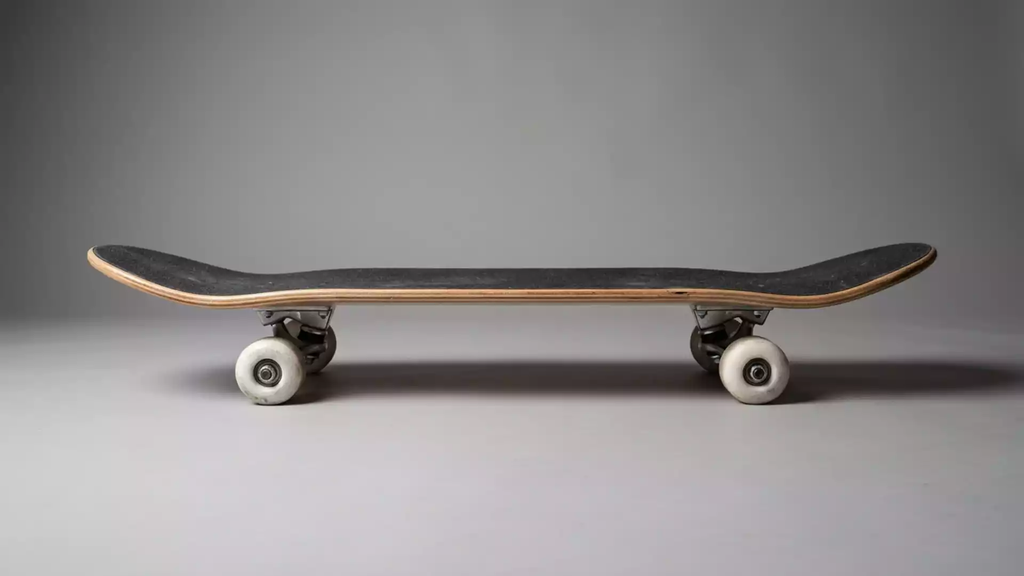
A complete skateboard is more than a deck with four wheels.
For skateboard brands, distributors, sporting-goods buyers and toy companies, a complete skateboard is a coordinated product made from several components that must work together.
The basic components normally include:
- Deck
- Trucks
- Wheels
- Bearings
- Grip tape
- Hardware
Depending on the design, the product may also include riser pads, different mounting hardware, packaging accessories or other customized components.
For B2B buyers, understanding these components is important because each one affects product performance, cost, appearance and manufacturing requirements.
When developing an OEM complete skateboard, the goal is not simply to source each part individually. The components need to be specified and assembled as a complete system.
1. Skateboard Deck
The deck is the foundation of the complete skateboard.
It determines the basic platform on which the rider stands and influences the overall geometry of the product.
Important deck specifications include:
- Width
- Length
- Wheelbase
- Shape
- Concave
- Construction
- Thickness
- Graphic design
Traditional skateboard decks are commonly manufactured from laminated wood veneers, with 7-ply maple being a familiar construction for many standard skateboard products.
However, different product categories may require different materials and constructions.
For a brand developing a complete skateboard, the deck should be selected first because other components need to match its dimensions.
Our Complete Skateboard Manufacturer service can coordinate deck and component specifications as part of an OEM production program.
2. Skateboard Trucks
Trucks connect the deck to the wheels and allow the skateboard to turn and pivot.
A typical truck includes:
- Hanger
- Axle
- Baseplate
- Kingpin
- Bushings
- Washers
- Axle nuts
For buyers, truck width is especially important.
The truck should be appropriately matched to the deck width. A truck that is too narrow or too wide can affect the balance and handling of the finished skateboard.
Truck specifications can also include:
- Axle width
- Hanger material
- Baseplate design
- Truck height
- Bushing hardness
- Finish
- Color
For branded products, anodized colors or customized finishes can help coordinate the trucks with the deck graphics and overall product identity.
3. Skateboard Wheels
A complete skateboard normally uses four wheels.
Wheel specifications include:
- Diameter
- Width
- Durometer
- Material
- Core design
- Color
- Graphics
Wheel diameter influences the overall ride characteristics and setup.
Durometer describes the hardness of the wheel material and can affect grip, rolling feel and response.
For a B2B product line, wheel selection should be connected to the intended application.
A street-oriented product may require different wheel specifications from a cruiser or beginner-oriented skateboard.
Wheel color and graphics can also become part of the brand identity.
For example, a skateboard brand may choose a custom wheel color that matches its deck artwork and packaging.
4. Skateboard Bearings
A standard skateboard setup normally uses eight bearings — two bearings per wheel.
Bearings allow the wheels to rotate around the truck axles.
Common bearing specifications include:
- Steel bearings
- Ceramic bearings
- Shield configuration
- ABEC rating
ABEC ratings are commonly used to classify bearing manufacturing tolerances, but buyers should not treat a higher ABEC number as the only indicator of skateboard performance.
For OEM projects, the important question is whether the selected bearing specification matches the intended product positioning and target cost.
A premium product may justify a different bearing specification from an entry-level complete skateboard.
5. Grip Tape
Grip tape is applied to the top of the skateboard deck.
Its primary function is to provide traction between the rider’s shoes and the deck.
Typical grip tape specifications include:
- Grit
- Sheet size
- Thickness
- Backing material
- Color
- Printed graphics
- Die-cut shape
For a branded complete skateboard, grip tape provides another opportunity for customization.
A manufacturer can potentially produce printed backing paper, custom shapes or brand-specific graphics depending on the production requirements.
This means the brand identity does not have to exist only on the bottom of the deck.
6. Hardware and Optional Components
Hardware is used to attach the trucks to the deck.
A standard skateboard typically uses eight mounting bolts and nuts.
Hardware length can vary depending on the deck construction and whether additional components such as riser pads are used.
Riser pads are optional components installed between the truck baseplate and deck.
They can change the distance between the deck and wheels and may be considered when using certain wheel sizes or setups.
Other optional components can include:
- Shock pads
- Bearing spacers
- Speed rings
- Specialized hardware
- Customized mounting components
The exact configuration depends on the product.
For brands developing a complete skateboard, it is important to specify the entire assembly rather than treating optional components as afterthoughts.
How Do These Components Work Together?
The most important concept for B2B buyers is that the components must be compatible.
For example:
Deck Width → Truck Width → Wheel Size → Wheel Clearance
These specifications should be evaluated together.
Similarly:
Deck → Grip Tape → Hardware → Trucks
must work as an integrated assembly.
A complete skateboard manufacturer should therefore evaluate the product as a system.
A common mistake is to select the cheapest individual components and combine them at the end.
This can create compatibility problems, inconsistent appearance or unexpected changes in product cost.
For brands developing custom products, it is usually more efficient to define the complete product specification before requesting final production pricing.
You can review our Skateboard Components page for more information about component sourcing and specifications.
How Should Brands Specify a Complete Skateboard?
A professional RFQ should ideally include:
Deck
- Width
- Length
- Wheelbase
- Shape
- Concave
- Construction
- Graphics
Trucks
- Width
- Material
- Height
- Color
- Finish
Wheels
- Diameter
- Width
- Durometer
- Color
- Graphics
Bearings
- Type
- Shield
- Grade
- Quantity
Grip Tape
- Size
- Grit
- Color
- Graphic
- Die-cut
Packaging
- Box type
- Printing
- Labels
- Barcode
- Carton specification
The more complete the specification, the easier it is for the manufacturer to provide an accurate quotation.
If you are developing a branded product rather than purchasing an existing standard complete skateboard, you can also review our OEM Skateboard Manufacturer service.
FAQ
What are the main components of a complete skateboard?
The main components are a deck, two trucks, four wheels, eight bearings, grip tape and mounting hardware. Additional components such as riser pads may be used depending on the setup.
How many bearings does a complete skateboard need?
A standard complete skateboard normally requires eight bearings, with two bearings installed in each wheel.
Do skateboard trucks need to match the deck size?
Yes. Truck width should be appropriately matched to deck width to maintain a balanced setup and avoid handling or clearance problems.
Can I customize every component of a complete skateboard?
Depending on the manufacturer and order quantity, many components can be customized, including the deck, graphics, trucks, wheels, grip tape and packaging.
Can a manufacturer assemble the complete skateboard for me?
Yes. Complete skateboard manufacturers can supply the components and perform final assembly, allowing brands to receive a finished product rather than separate parts.
Conclusion
A complete skateboard is an integrated product made from several components that must work together.
The deck establishes the basic geometry. Trucks provide turning and connect the deck to the wheels. Wheels and bearings determine how the board rolls, while grip tape provides traction and hardware holds the assembly together.
For B2B buyers, the most important step is to define the components as one complete product specification.
This makes it easier to compare quotations, control quality, maintain consistency between production runs and develop a product that matches your target market.
Yobang Sports manufactures complete skateboards for brands, distributors, sporting-goods buyers and toy companies, with options for custom decks, components, graphics and packaging.
REQUEST A QUOTE
Request a Skateboard Manufacturing Quote
Send us your preferred deck specifications, components, estimated quantity and packaging requirements. If you are still developing the product, tell us your target market and product positioning and our team can help evaluate the configuration.