
When developing a kids skateboard, one of the first product decisions is the deck material.
Should you choose a PP skateboard deck or a maple skateboard deck?
For brands, toy companies, sporting-goods retailers and distributors, this decision affects much more than the appearance of the skateboard. Deck material can influence product weight, flexibility, durability, riding characteristics, manufacturing cost, graphic options, product positioning and even how the skateboard should be tested for the target market.
There is no universal answer that PP is better than maple, or that maple is always the premium choice.
Instead, the right material depends on what you want the product to achieve.
A colorful entry-level skateboard for younger children may have very different requirements from a premium kids skateboard designed to look and feel like a smaller version of an adult skateboard.
For B2B buyers, the better question is:
Which deck material is more suitable for my target customer, product positioning and sales channel?
In this guide, we compare PP and maple kids skateboards from a product-development and sourcing perspective, including material characteristics, product positioning, customization, cost considerations and OEM manufacturing.
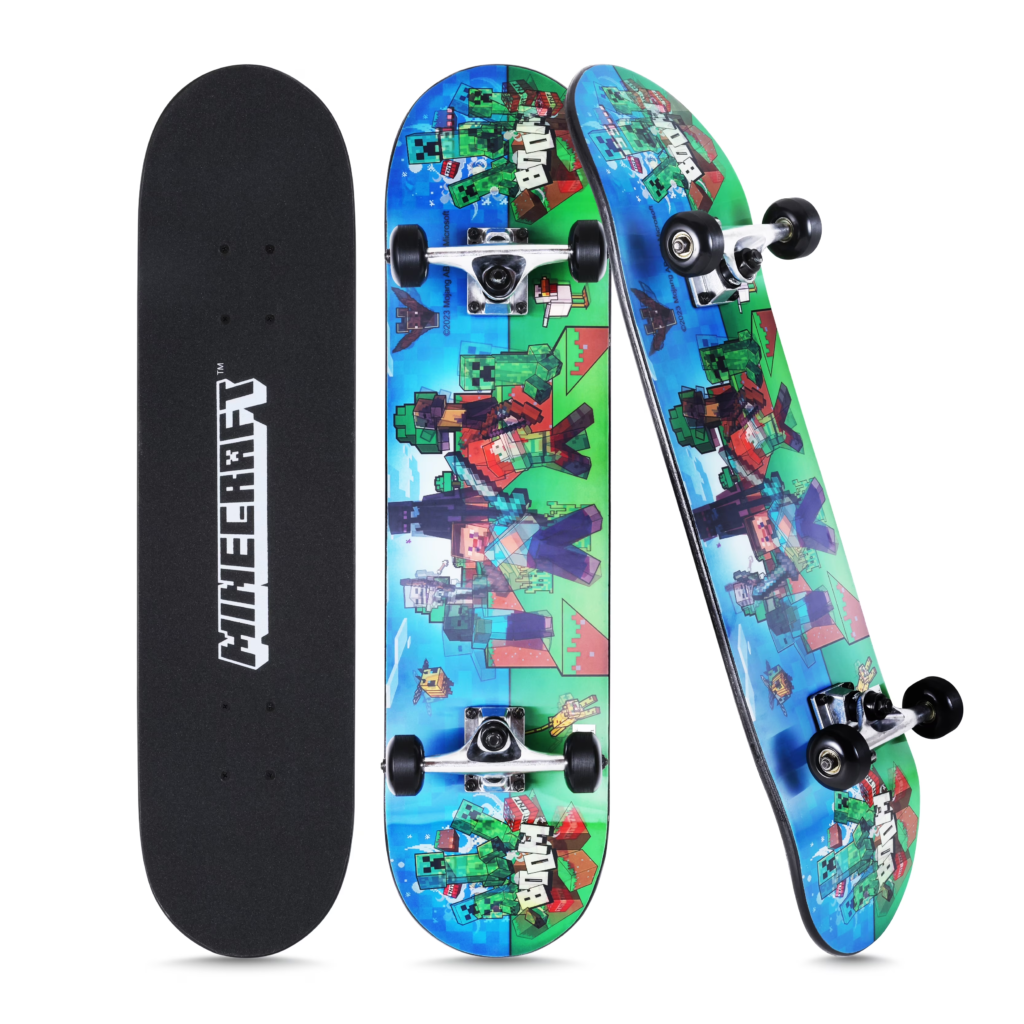
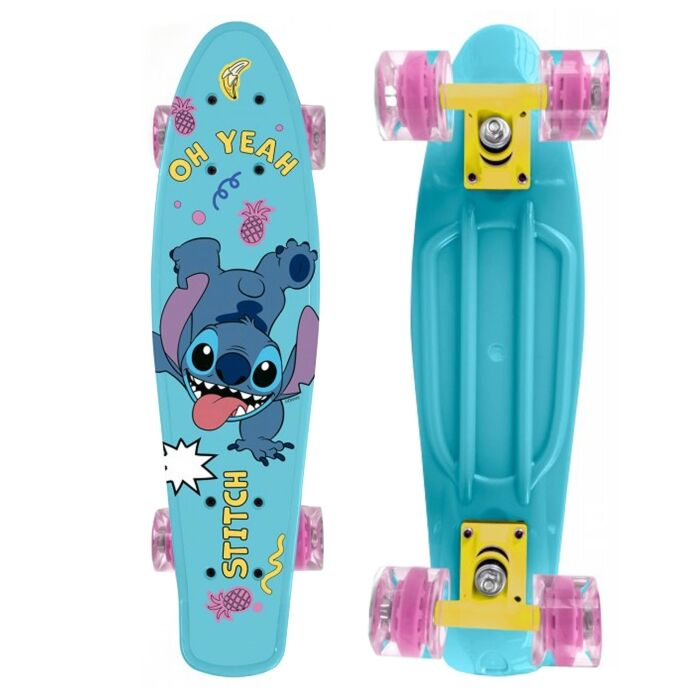
PP vs Maple Skateboards: What Is the Basic Difference?
PP stands for polypropylene, a thermoplastic polymer widely used in consumer products and molded components.
For kids skateboards, PP decks are commonly produced through plastic molding processes. This allows manufacturers to create different shapes, colors and surface designs without using the same multi-ply wood construction required for a traditional maple deck.
Maple skateboards, by comparison, are constructed from multiple layers of wood veneer. A typical skateboard deck may use several layers of maple veneer that are glued, pressed and shaped into the final deck.
The two materials therefore offer fundamentally different manufacturing approaches.
PP Kids Skateboards
PP decks can be attractive for brands looking for:
- Lightweight product designs
- Bright colors
- Molded shapes
- Entry-level price positioning
- Kids-oriented graphics
- High-volume production
- Easy integration of molded design features
Because the deck is molded rather than assembled from wood veneers, PP can provide manufacturers with considerable flexibility when developing specific shapes and visual styles.
This makes PP particularly interesting for toy companies and brands targeting younger consumers.
Maple Kids Skateboards
Maple decks provide a more traditional skateboard construction.
A maple skateboard generally offers:
- A more traditional skateboard appearance
- Multi-ply wood construction
- A familiar skateboard feel
- More premium product positioning
- Greater similarity to adult skateboard construction
- Strong branding opportunities through deck graphics
For a sporting-goods brand or skateboard brand, maple may be the preferred option when the goal is to create a kids product that feels closer to a conventional skateboard rather than a toy.
However, the final performance depends on the complete skateboard specification—not just whether the deck is maple.
Deck construction, thickness, concave, shape, trucks, wheels, bearings, assembly and quality control all influence the finished product.
PP vs Maple: Which Material Is Better for Different Product Lines?
The best material depends heavily on the product line you are developing.
A manufacturer should not recommend PP or maple simply because one material is cheaper or more familiar.
Instead, start with the target consumer.
1. Entry-Level Kids Skateboards
For an entry-level kids skateboard, PP can be an attractive option.
A retailer may want a skateboard with:
- Competitive retail pricing
- Bright colors
- Simple graphics
- Easy-to-understand product features
- Strong visual appeal
- Lower product development complexity
PP can work well for this type of product because the material is suitable for molded designs and colorful product concepts.
For toy companies, this can be particularly useful when the skateboard is positioned as part of a broader children’s outdoor toy range.
For example, a product line might include several deck colors:
- Pink
- Purple
- Blue
- Green
- Yellow
The same basic deck platform can potentially be developed with different colors and graphics for different markets.
This can simplify product-line planning.
However, buyers should still evaluate the complete product through appropriate testing. A low retail price does not eliminate the need for proper safety evaluation.
2. Premium Kids Skateboards
If your goal is to create a premium kids skateboard, maple may be more suitable.
A maple deck immediately communicates a more traditional skateboard construction to many buyers.
This can be valuable when your product is sold through:
- Skateboard brands
- Sporting-goods retailers
- Specialty sports stores
- Premium online stores
- Skateboarding-focused distributors
A premium kids skateboard may also use more sophisticated specifications, such as:
- 7-ply maple construction
- Custom concave
- Custom deck shape
- Aluminum trucks
- Higher-quality polyurethane wheels
- Branded bearings
- Custom grip tape
- Premium packaging
In this situation, maple is not simply a material choice.
It becomes part of the overall product positioning.
The product can be presented as a genuine skateboard designed specifically for younger riders rather than simply a children’s toy that happens to have wheels.
3. Toy Company Products
Toy companies often have different priorities from skateboard brands.
For a toy company, product appearance can be extremely important.
The company may want:
- Character graphics
- Bright colors
- Custom shapes
- Retail-friendly packaging
- Strong shelf visibility
- Simple product specifications
- Competitive landed cost
PP can be attractive for these projects because molded plastic provides opportunities for strong visual differentiation.
For example, a toy company developing a licensed children’s product might want the skateboard to match a particular character or color system.
The manufacturer can then evaluate whether a PP platform or maple platform is more appropriate for the intended design and production volume.
The important point is that the graphic concept should not determine the material by itself.
The complete product must still satisfy the applicable safety and testing requirements.
For products intended for children in the United States, ASTM F963 is incorporated into the federal toy safety framework. CPSC states that third-party testing and certification requirements apply to toys designed or intended primarily for children 12 and under, subject to the applicable rules and exceptions.
4. Skateboard Brand Products
A skateboard brand may place more emphasis on the riding experience and skateboard construction.
In this case, maple is often worth considering because it allows the kids product to share more characteristics with the brand’s adult skateboard range.
For example, a skateboard brand could develop:
Adult Collection
- 8.0″ maple deck
- Standard skateboard trucks
- 54 mm wheels
Kids Collection
- Smaller maple deck
- Junior truck configuration
- Smaller wheels
- Age-appropriate specifications
This creates a more consistent brand architecture.
Parents may see the kids board as an entry point into the brand rather than a completely separate toy category.
PP vs Maple Kids Skateboards: Key Factors Buyers Should Compare
Material selection becomes much easier when you compare the two options against the actual requirements of your product.
| Factor | PP Kids Skateboard | Maple Kids Skateboard |
|---|---|---|
| Material | Polypropylene | Multi-ply wood |
| Manufacturing | Molded | Veneer pressing + shaping |
| Visual style | Colorful, molded designs | Traditional skateboard appearance |
| Product positioning | Entry-level / toy-oriented | Sports / premium-oriented |
| Graphic flexibility | High | High |
| Shape customization | Mold-based | Mold/tooling + deck pressing |
| Brand positioning | Toy / lifestyle | Skateboard / sporting goods |
| Typical product strategy | High-volume, colorful SKU range | Premium or performance-oriented range |
| Product feel | Depends heavily on design | Traditional wood skateboard feel |
| Best suited for | Toy companies, entry-level products | Skateboard brands, sporting-goods brands |
This table should be viewed as a product-development starting point, not an absolute rule.
A well-designed PP skateboard can be a successful branded product, while a poorly specified maple skateboard can still perform badly.
The complete specification matters.
How Should You Choose Between PP and Maple?
Instead of asking which material is better, ask five questions.
1. Who Is the Target Age Group?
Age is one of the most important factors.
A product designed for very young children may have completely different requirements from a skateboard designed for older children or junior riders.
Consider:
- Target age
- Rider weight
- Product dimensions
- Intended use
- Expected riding environment
- Whether the product is marketed primarily as a toy or sporting product
Do not simply copy an adult skateboard specification and make the deck smaller.
A kids skateboard should be developed as a complete product.
2. What Is Your Target Retail Price?
Your target retail price will influence material selection.
For example, if you are developing a mass-market children’s skateboard for a large retail chain, you may prioritize:
- Competitive factory cost
- Efficient packaging
- Lightweight shipping
- Attractive colors
- High-volume production
A different product strategy may be appropriate for a premium skateboard brand where the customer is willing to pay more for construction, graphics and brand positioning.
Therefore, before asking a factory for a quotation, give the manufacturer your target market and approximate retail positioning.
3. How Important Is Traditional Skateboard Construction?
If the product needs to look and feel like a traditional skateboard, maple deserves serious consideration.
A wood deck can help create a stronger connection between the children’s product and an existing skateboard brand.
If the product is primarily a colorful children’s outdoor toy, PP may provide more design freedom.
4. How Many SKUs Do You Plan to Launch?
SKU strategy is often overlooked.
Imagine that a retailer wants six children’s skateboard SKUs.
Each SKU could have:
- Different deck color
- Different graphic
- Different packaging
- Different character
- Different wheel color
If the underlying platform remains the same, production and quality control may be easier to manage.
For large-volume programs, ask the manufacturer which components can remain standardized and which components need new tooling or development.
This is especially important for private-label programs.
5. Which Market Are You Selling Into?
The target market matters because product compliance requirements can differ.
For example, U.S. children’s products may be subject to ASTM F963 and CPSIA-related requirements. CPSC currently identifies ASTM F963-23 as the applicable toy safety standard version for products covered by the federal rule.
In Europe, buyers also need to determine which requirements apply based on the product’s intended use and age group.
EN 13613:2009 covers non-motorized skateboards supplied for one rider and includes performance criteria based on rider weight. Importantly, BSI notes that EN 13613 is not applicable to skateboards for riders up to 20 kg, for which EN 71-1 is applicable.
That means buyers should not simply put “ASTM F963 + EN 13613” on a product specification and assume the product is automatically compliant.
The correct standards depend on the actual product, intended user, market and classification.
A qualified testing laboratory and experienced manufacturer should review the specification before production.
PP or Maple: What Should You Ask Your Skateboard Manufacturer?
When requesting quotations, do not simply write:
“Please quote 1,000 kids skateboards.”
That gives the factory too little information.
A better RFQ should include:
Product Information
- PP or maple preference
- Deck dimensions
- Target age
- Target rider weight
- Intended market
- Estimated order quantity
- Number of SKUs
- Product positioning
- Target retail price, if available
Deck Specifications
For maple:
- Number of plies
- Maple veneer specification
- Deck thickness
- Length and width
- Concave
- Shape
- Wheelbase
- Graphic requirements
For PP:
- Material specification
- Deck dimensions
- Mold requirements
- Surface finish
- Color
- Graphic method
- Structural requirements
Complete Skateboard Components
Also specify:
- Truck size
- Truck material
- Wheel diameter
- Wheel hardness
- Wheel shape
- Bearing specification
- Grip tape
- Hardware
- Packaging
This gives the factory enough information to evaluate the complete product rather than quoting a generic skateboard.
Why the Complete Product Matters More Than the Deck Material
One of the most common mistakes in product development is focusing too heavily on the deck.
A skateboard is a system.
The deck interacts with:
- Trucks
- Wheels
- Bearings
- Grip tape
- Hardware
- Rider weight
- Wheelbase
- Deck width
- Packaging
- Intended use
For example, changing wheel diameter can change the relationship between the deck, truck height and ground clearance.
Changing truck dimensions can affect the overall width and handling characteristics.
Changing the deck shape can affect wheel clearance and product appearance.
Therefore, when developing a children’s skateboard, the manufacturer should evaluate the complete configuration.
This is particularly important when the product will be sold through major retail or toy channels.
ASTM F963 itself covers a broad range of toy safety considerations, including material quality, flammability, toxicology, accessible edges and points, stability and overload requirements, and wheels, tires and axles where applicable.
The implication for buyers is simple:
Do not select PP or maple first and worry about the rest later.
Develop the complete product specification first.
PP vs Maple for Private Label Skateboards
Private-label buyers have another consideration: differentiation.
If you are launching a private-label kids skateboard, the material should support your brand identity.
A PP skateboard may be suitable when your brand focuses on:
- Children’s lifestyle products
- Bright colors
- Character-driven designs
- Outdoor toys
- Entry-level products
- Large retail distribution
A maple skateboard may be more appropriate when your brand focuses on:
- Skateboarding
- Action sports
- Premium sporting goods
- Authentic skateboard culture
- Higher perceived product value
There is also an opportunity to build a product family.
For example:
Entry Level
PP deck + simple components + colorful packaging
Mid Range
Maple deck + standard skateboard components + custom graphics
Premium
7-ply maple deck + custom concave + upgraded components + premium packaging
This allows one brand to address different price points without creating completely unrelated products.
How a Kids Skateboard Manufacturer Can Help
A good manufacturer should not simply tell you:
“PP is cheaper.”
or:
“Maple is better.”
The manufacturer should first understand the project.
A professional OEM discussion should cover:
- Target market
- Target age
- Rider weight
- Product positioning
- Expected order quantity
- Deck material
- Complete-board configuration
- Graphic requirements
- Packaging
- Applicable testing requirements
From there, the factory can recommend a practical specification.
At Yobang, our Kids Skateboard Manufacturer service is designed for brands, toy companies and sporting-goods buyers developing children’s skateboards.
Depending on the project, we can evaluate PP and maple deck options, custom graphics, components, packaging and production requirements.
For broader OEM projects, buyers can also review our OEM Skateboard Manufacturer capabilities.
If you are developing a complete product rather than purchasing decks only, see our Complete Skateboard Manufacturer page.
For custom specifications, graphics, deck dimensions or packaging, our Custom Skateboards service can be used to develop the product around your requirements.
You can also review our Skateboard Manufacturing Process to understand how material selection, pressing, shaping, printing, assembly and quality control fit together.
FAQ: PP vs Maple Kids Skateboards
Is PP better than maple for kids skateboards?
Not necessarily.
PP can be attractive for colorful, lightweight and entry-level children’s products, while maple can be better suited to premium or more traditional skateboard products.
The correct choice depends on the target user, price point, product positioning and market.
Are maple skateboards better quality than PP skateboards?
Not automatically.
Material alone does not determine overall product quality.
The deck structure, manufacturing process, trucks, wheels, bearings, assembly and quality control all influence the finished skateboard.
Are PP skateboards suitable for private-label brands?
Yes.
PP can be suitable for private-label children’s products, particularly when the brand wants colorful designs, molded shapes or a competitive price position.
Are maple skateboards suitable for toy companies?
Yes.
A toy company can use maple when it wants a more traditional skateboard appearance or a higher-end product position.
The important consideration is whether the complete product meets the requirements of the intended market.
Which is cheaper, PP or maple?
There is no universal factory price difference.
The final cost depends on deck construction, tooling, order quantity, components, graphics, packaging, testing and other project requirements.
For an accurate quotation, buyers should provide a complete product specification.
Can I develop both PP and maple versions?
Yes.
For some brands, developing two versions can be an effective product strategy.
For example, a PP model can target entry-level retail customers while a maple model targets a higher price point.
The two products should be developed with clearly differentiated specifications and positioning.
What should I send a manufacturer when requesting a quote?
At minimum, provide the target age, deck material preference, dimensions, estimated quantity, target market, graphics, components, packaging requirements and intended retail positioning.
If you have reference products, drawings, artwork or photos, providing them can make the quotation process much more accurate.
Conclusion
So, PP vs maple kids skateboards—which is better?
The answer depends on your product strategy.
Choose PP when your priority is a colorful, lightweight, entry-level or toy-oriented children’s product with flexible molded design possibilities.
Choose maple when your priority is a more traditional skateboard construction, stronger skateboard-brand positioning or a premium sporting-goods product.
For many B2B buyers, however, the most important decision is not simply the deck material.
It is whether the manufacturer can help you develop the right complete skateboard specification for your target market.
The right product should balance:
- Material
- Deck construction
- Rider age
- Rider weight
- Components
- Design
- Retail price
- Production quantity
- Packaging
- Quality control
- Applicable safety requirements
If you are planning a kids skateboard project and are not sure whether PP or maple is the better choice, send us your target market, estimated quantity and product concept. We can evaluate the specification and recommend a suitable manufacturing approach.
REQUEST A QUOTE
Develop your next kids skateboard with an experienced OEM manufacturer.
Contact Yobang Sports for PP or maple kids skateboard manufacturing, custom graphics, private-label production, components and packaging.